
Marriott CFO to Speak at Barclays Gaming and Lodging Conference
eeny Oberg, executive vice president and chief financial officer at Marriott International, Inc. (NASDAQ:MAR), will speak at the Barclays 2017 Gaming, Lodging, Leisure, Restaurant and Food Retail Conference, to be held on Wednesday, December 6. Ms. Oberg’s remarks will be at approximately 3:05 p.m., Eastern Time, and will be webcast live.
To access the webcast, please go to http://www.marriott.com/investor, and then click on the link to the “Barclays Gaming and Lodging Conference” under “Recent and Upcoming Events.”
The webcast will be available until March 5, 2018 at the same site.
Read MoreRwanda’s Urwagwa Banana Beer comes of age, now on the tourist map
You may ask yourself what a refined and polished tourist from New York who has jumped off the plane at the Kigali International Airport and traveled to Musanze has in common with a rustic and weather-beaten Nyakinama village when you see them walking and chatting together along a small strip of road behind the imposing buildings of Musanze Village Polytechnic, seven kilometres west of Musanze town, northern Rwanda. The answer is Red Rocks Cultural Centre.
Both have a common interest that can be summed up into learning from each other’s culture. Since its establishment in 2011, Red Rocks Cultural Centre has established different programmes that help in promoting tourism, conservation and community development, and in this regard it has also helped in promoting activities that help to bring people of different backgrounds around the world to share their unique cultural experiences.
Jeanne Sauer, a tourist from Germany, says when she came to Rwanda her main purpose was not to see the famous mountain gorillas in their natural habitat around the Virunga massif, but to also experience what Rwandan people have to offer in terms of their culture.
“I had read about Rwanda and this is the country I had put on by bucket-list to visit one day. A quick Google search introduced me to Red Rocks and the amazing activities they provide there. I said this is a country I have to visit and here I am at Red Rocks, relishing my dreams,” she says.
The dream Sauer must be talking about is the various cultural activities that she found being carried out at Red Rocks. She says when she asked the staff about how she could spend her time enjoying the real cultural heritage of Rwanda, she was told that there are many activities that the local women here are engaged in, including making of authentic traditional Rwandan handicrafts, and of course demonstrating how to make the traditional beer.
“I wanted to have a first-hand experience of making the traditional beer. This is when they called a group of women who came with raw materials, precisely ripe bananas and the millet to help in making the final product,” she says.
Preserved and unchanged by a few die-hard loyalists, the brewing of Urwagwa – a local brew made out of crushed bananas – remains faithful to an ancient formula handed down over generations in Rwanda.
“The women, through their interpreter, led me through the whole process, and what I discovered is that it was not an industrial scale process as we know it but just putting your energy and effort into it,” says Sauer.
Like most traditional skills, the recipe and process for brewing Urwagwa is mostly handed down from father to son.
Jeanne Uwangabiye, a 52-year-old woman from Nyakinama village, says she picked the tips from his grandfather who would not substitute Urwagwa with any other beverages. She finds it appropriate to lead tourists through the process, which begins with obtaining ripe bananas and pressing them with grass to yield slightly clear juice.
The contents of the tank are then stirred and the leaves squeezed to remove residual juice which can effectively be obtained through using a small amount of water.
After that sprouted, lightly roasted or ground millet is poured on top of the juice which thereafter is covered in banana leaves and kept in a warm area for three days and this is why some times the mixture is buried in the ground to allow fermentation.
The process of fermentation happens because there are enzymes present in the sorghum which facilitate the breaking down of banana starch that is eventually acted upon by the yeasts and bacteria. Those who prefer enjoying the drink while it is as clean as possible may have to filter it prior to consumption.
“What I liked most about this experience is drinking what I had brewed with my own hands. It made me realize how life can be simple,” says Sauer.
Another tourist from the US, Fredric Fitzgerald, says he learned about the skills of making the traditional beer in a home in Nyakinama village when he went for a homestay.
“It was exciting to see how the people around there are able to use simple ingredients to make such stuff. And the taste was not all that bad!” he quips.
Read MoreLocal Tourism Players Applaud AfDB’s Support
Local tourism and hospitality sector players have welcomed the initiative by African Development Bank (AfDB) to support diversification of tourism business, saying it will help make the industry more competitive and attractive. Commenting on the development, Osborn Kinene, the Rwanda Eco-Tours chief executive, said diversifying the tourism industry presents industry investors and other stakeholders, including communities surrounding tourism sites and national parks an opportunity to expand offerings and attract more visitors.
While speaking during the World Tourism Day celebrations in New York last Wednesday, the African Development Bank (AfDB) president, Dr Akinwumi Adesina, said the continental funder was renewing its support for the tourism industry, focusing on projects that seek to promote diversification of tourism on the continent. The annual event is organized by the United Nations World Tourism Organization (UNWTO).
Rwanda Development Board projects the tourism sector to generate about $444 million in 2017, up from $404 million recorded last year. Meanwhile, Adesina has called for strong public-private sector partnerships geared at supporting and promoting sustainable tourism development in Africa.
He added that Africa’s tourism and travel industry can serve as an engine of progress for socio-economic transformation. Adesina challenged Africa’s tourism and travel industry players to work together and bring up innovative ideas and initiatives that will help revolutionize the sector.
He added that the cultural and creative industries, such as textiles, fashion, food, culinary, arts and film present huge untapped potential that could help boost tourism on the continent, and create jobs and spur incomes of communities.
Read More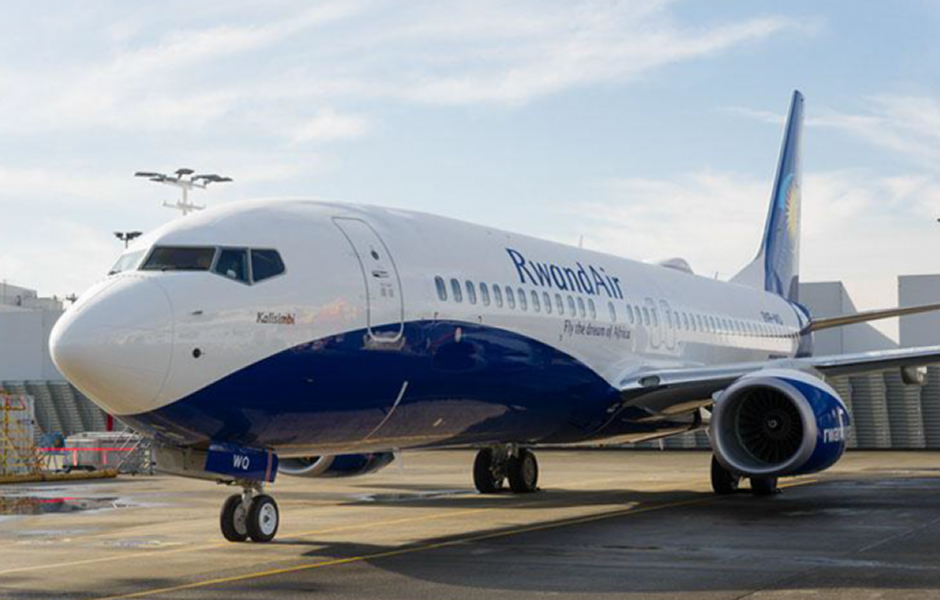
Hop, skip and jump: Sampling RwandAir’s East African network
In contrast to a lot of other airlines, rapidly expanding on the back of massive government pride programs or compulsively delving into opulence way beyond the spirit of their initial charter, RwandAir seems to earnestly reflect the new-found optimism of the country without exaggeration. Just as Kigali is a neat and well-groomed city rather than a hollow, high-rise metropolis, so the national carrier is a relatively small, but impressively well-oiled machine – and nowhere is this more apparent than from a customer’s perspective.
As a foreigner with a professional network spread over East Africa, I clock up quite a few days on the road in the region yearly. However, the unpredictable nature of the entertainment industry makes it infeasible to rely on solely one mode of transport when moving around – as is the case for most travel here. In addition to this, I’m an aviation geek, and my travels in the region more often than not find me at an airport, ready to sample yet another airline offering more or less comfortable flights at a more or less competitive price point. Of course, coaches are cheap and reliable, but when time is of the essence, you can’t beat flying – and nothing beats the thrill of roaring down the runway before seeing the lovely landscape unfold below you, at least in my book.
A few days of meetings and networking in Nairobi recently, gave me the opportunity to sample some of the very newest aircraft trawling East African skies. With an average age of around 6 years, RwandAir really does have a thoroughly modern, eco-friendly and efficient fleet. New planes, however, are no match for flaws in other aspects of customer experience, so I was very interested to see how the crew and facilities stacked up to their impressively fresh aircraft.
Flight: EBB-NBO
Date: 9th March 2017
Aircraft: 9XR-WQ, 737-800, delivered Nov. 2016
Duration: 1 hour
Entebbe Airport is compact and easily navigated. The staff are sometimes very friendly, at other times very formal and cold. In other words, not the greatest airport in the world, but far from the worst. I had a late morning flight out, which is a time of day when Entebbe does not receive fully-laden flights from far-off destinations and everything moves at a leisurely pace. Such was the case on this lovely March day: check-in went smoothly, as did the passage through immigration before the departure lounge revealed itself fairly empty. boarding had not yet started, so I enjoyed a cup of coffee along with the free WiFi offered by the airport.
After having gone through the pre-boarding and subsequent wait, I was happy to board the almost brand new 737-800 aircraft. It had the “new plane smell” that I all too infrequently experience, but so much the better on the few occasions I do get it. The 3-a-sideslim leather seats made for excellent leg room, and with around a 50% load, there was ample room to recline the seats and lift the arm rests, making the amount of personal space very generous. A very smartly dressed, efficient crew made sure we were all properly strapped in for an on-time push-back and taxi. Shortly after takeoff, they were there, offering drinks and making ready for a meal service. And what an impressive meal service! In addition to some very tasty chicken, we were served a roll of bread –with butter and cheese– and cake for dessert. Hot food on a 1-hour hop is not something you can get for free back home (and for economy passengers, they hardly even stock snacks), so this was a very pleasant surprise. The drinks were also kept coming, and before I could say chin-chin to my seat neighbor, we were approaching JKIA and Nairobi. Clearing immigration was a breeze, and I met my ride outside easily.
Flight NBO-KGL-EBB
Date: 12th March 2017
Aircraft: 9XR-WI, Canadair CRJ-900, delivered Oct. 2012 & 9XR-WL, De Havilland Canada DHC-8-400, delivered Feb. 2014
Having concluded my business in Nairobi, I was looking forward to another day of flying, this time in two different RwandAir aircraft, both of which were relative newcomers to my own flying experience. I have flown each of these aircraft only a handful of times, and while I am never averse to 737’s and Airbuses, it’s always refreshing to be taken for a flight on other birds as well.
I like JKIA for departures. The modular nature of their main terminal means you’ll never feel extremely crowded, as only a handful of flights are checking in at any one time in the same area as you – as was the case on this day. In fact, the only other departure from Terminal 1C at the same time as us, was an Ethiopian Airlines flight to Addis Ababa, and it seemed that most of their passengers were already through by the time I arrived. It was evident from talking to others I was queueing with, that a fairly large contingent was travelling together, heading to Bujumbura. They were in a good mood for travelling, and I could tell this was going to be an entertaining flight.
Canadair regional jets are definitely smaller than Boeing 737’s, but with the 2×2-configuration, we were all very comfortable. RwandAir does offer a business class product on these aircraft, with a more comfortable 1×2 configuration, but no upgrades were offered to the six seats – of which only one was taken for this flight. The upgrades, however, were not needed. The party bound for Burundi lived up to my expectations, providing raucous entertainment for the 75 minutes the flight lasted. It was all further fueled by the generous servings of food and drink the very professional and pleasant crew offered up throughout the flight.
As we landed in Kigali, our ways parted inside the compact, yet airy departures lounge of Gregoire Kayibanda International Airport. Despite a relatively long queue, my passport was checked quickly, and I had a quick look around before deciding to spend $ 25 on access to the Pearl Lounge for the duration of my stay – which was scheduled to be around 4 hours. The lounge was nice, with plenty of areas to sit and relax, as well as a work area for the large number of business travellers who need to be available or to finish the report that was due yesterday. There was free WiFi in the lounge, and this worked perfectly fine, even though I suspect it would struggle quite a bit if it wasn’t for the relatively few people apparently using it. There was a modest amount of food available, both hot and cold, and while this was all fine, it did not blow me away to the same degree that the service aboard the RwandAir aircraft had done.
After a good session of work, some food and a couple of cold drinks, I was ready to head down to the day’s second flight, taking me back to Entebbe. I did end up sitting in the gate area for a lot longer than I had needed. Oh well, maybe I was a little restless to get back up in the air. As soon as boarding did start, we got on the bus that would take us to the aircraft pretty quickly. There was only one snag, an aircraft chartered by the government to transport soldiers was disembarking along our route, and if you’ve ever been to the circus and seen the clowns coming out of the small car (they just keep coming and coming, endlessly), well, it was a little bit like that. We stood for a good 15 minutes waiting for all the soldiers to exit before our bus driver gave up and took a detour around the scene.
Our DHC-8-400 was very fresh looking, and the seats were the most comfortable I have ever experienced in aircraft of this size. Despite the slight delay getting to the aircraft, this was quickly recovered by an efficient crew, and a fairly light load of passengers. Even on this short 50-minute flight, a hot meal and free drinks was served. The service was very professional and pleasant, as I had now come to expect from RwandAir.
All in all, travelling within East Africa on RwandAir was a thouroughly pleasant experience which I would have no qualms about repeating. I am now also eagerly looking forward to sampling their new long-haul service to Europe. Let me just get my calendar…
The writer is the managing director of East African Records
Read MoreSingita to Open Lodge in Volcanoes National Park
Singita, is set to launch their latest venture on a breath-taking, isolated but contained, 188 acre piece of land, right on the edge of Rwanda’s Volcanoes National Park. Singita Kwitonda will be built to embody the spirit of Rwanda and offer a tribute to the lodge’s namesake – Kwitonda – a great silverback gorilla whose legend lives on in Rwanda and was known for his humility and gentleness. This remarkably positioned site offers a buffer between the farmland of the region and the national park where Rwanda’s iconic gorillas live.
The mountain gorillas of this region are Rwanda’s treasure and have flourished in the last decade, thus the Rwandan government is striving to find ways to increase their habitat. This is where Singita can provide support. Singita is about building sustainable revenue streams to support conservation efforts in Africa, and the government’s objective to grow the gorillas’ habitat aligns closely with Singita’s mission to create low-impact tourism to help preserve areas of iconic African wilderness for future generations. Singita was established in 1993 in South Africa and has set the bar for high-end safari escapes in Africa ever since, balancing a philosophy of preserving and protecting land and wildlife with the wellbeing of local communities. It is this conservation model that Singita is proud to be able to extend into Rwanda.
COO of Singita, Mark Witney comments: ‘The favourable environment and government’s commitment to develop tourism have made Rwanda a very attractive conservation development partnership for Singita. For our guests, a once-in-a-lifetime itinerary that includes a seamless transfer between our Serengeti properties in Tanzania and Rwanda covers two of the real ‘bucket list’ items on a seasoned traveller’s list – the Serengeti plains and the gorilla experience of the Volcanoes National Park. We’re honoured to be a part of this opportunity in Rwanda and furthermore extending Singita’s important conservation efforts across this magnificent continent’.
Singita’s established brand in the high-end tourism segment will attract influential world travellers who have a heightened awareness of the plight of wilderness and wildlife in Africa and want to be part of the solution.
Planned to open in August 2019, Singita Kwitonda will offer 8 suites and a villa with magnificent views of the Sabinyo and Gahinga volcanoes. Sustainability is at the core of the construction project. Paul Milton, CEO Singita Private Partnerships, states ‘We ran a sustainability framework in the design stage to ensure that what we are designing is as efficient as possible. For example a thermal analysis was completed in order to minimise energy usage given we’re positioned in a cool and temperate environment’. Great lengths have been taken to engage with specialists to create a light foot print and maximum energy efficiency on so many levels.
Read More6 Best Places to Go Birding in Rwanda
Rwanda has one of the highest bird counts on the continent, rated in top five destinations in the world for those seeking a rewarding birding experience. Any serious Rwanda birding safaris should incorporate both the wetter and more mountainous western regions, the drier Savannah of the east, and then time in some of the many wetlands and marshes and species rich forests.
Rwanda has at least 692 residents, visitors and occasional visiting bird species. An additional 5 locally extinct and another 5 are to be confirmed. This brings the total to a maximum of 702 species and there are at least 27 birds known as Albertine Rift Endemics, a total higher than any country in Africa, other than the DR Congo.
Landlocked and lying just south of the Equator, Rwanda has a diverse topography that has been shaped by the dynamics of one of Africa’s primary geological features, the Great Rift Valley. Tumultuous subterranean forces have over the last 50 million years contorted, ruptured and seared the crust, giving rise to a hugely impressive array of volcanoes, lakes, mountain ranges and forests that define the landscapes of today. Collectively, they make up the narrower and shorter western branch of the rift valley, or, because Lake Albert is its first discernable feature, the Albertine Rift or Albertine Eco- region.
The Albertine Eco-region
Comprising a chain of mountains formed through upliftment and volcanic activity, the Albertine Eco- region stretches across six countries and id regarded as the centre of the Afromontane habitat. It also a belt of exceptional fauna and flora endemism: over 40 bird species, 34 mammals, 117 butterflies, 34 amphibians and 16 reptiles are to be found. It is no winder it’s the most celebrated destination of ecological importance.
Around Kigali
The Nyarutarama Lake, or Lover’s Lake bordering the Kigali Golf Course, is surrounded by a track which offers excellent nature walks and bird watching opportunities. The Nyabarongo Wetlands also offer walking paths and good bird watching. This protected area covers 142.62 sq. km with two Lakes- Lake Mirayi in the south and Lake Rumira in the north. The wetlands are fed by the Nyabarongo River, a tributary of the Nile, which empties into the Akagera River which, in turn, flows into Lake Victoria. The birds to spot include; Cardinal Woodpecker, African Grey Horn bill, African Rock Pigeon, Brown Throated Wattle-Eye, Rwenzori Turaco, Dusky Crimson-wing, Collared Apalis, Rwenzori Double-Collared Sunbird.
Volcanoes National Park
To the north lies the volcanoes National Park, this protects the Rwandan portion of the Virunga Mountains, a Tran’s frontier Conservation area that includes protected areas in Uganda and DRC. Forming a complex of mostly dormant volcanoes, it includes Rwanda’s highest point, Mount Karisimbi (4507m), and two active ones, Mount Nyiragongo and Mount Nyamulagira, while more famous for its mountain gorillas and other primates, volcanoes boasts almost 165 bird species, with 17 Endemic to the area. Some of the Birds include; Red-billed Fire Finch, Cinnamon-chested Bee-Eater, Dusky Fly-catcher, Chubb’s Cisticola.
Nyungwe National Park
The Nyungwe National Park is a Tropical mountain rain forest and one of Rwanda main protected areas, lies on south- western slopes of the highland region that forms the great divide between the Congo and Nile drainage systems. The park protects one of the region’s largest and oldest remaining patches of montane rain forest and is home to 310 species of birds.
The forest in Rwanda are increasingly being sought out for the incredible birding opportunities, particularly the numerous Albertine Raft endemics; 27 to be found in Nyungwe, the highest concentration found in any single park in Africa. Amongst them are the; Regal Sunbird, Red-collared Babbler, Rwenzori Turaco, Handsome Spurgoel, Rwenzori Batis, Grauer’s Swamp-Warbler, Blue-headed sunbird, possibly the rarest of all endemic birds would be the Albertine Owlet known only five records in the area.
The Akagera National Park
The Akagera National Park in the northeast still covers a sizeable chunk of Savannah. Mixes of rolling grassland interspersed with broad and acacia woodland, these lower- lying lands are dissected by the Akagera River. The sought after species here would be; Red-faced Barbet, Sousa’s shrike, and white- collared Olive back, amongst others. The park has a mosaic of wetland and lakes, along then course of the Akagera River and the eastern boundary. A midst the papyrus and reed beds some of the prized species to be found are; Caruthers’s Cisticola, Papyrus canary and more.
Wetlands and Marshes
Rwanda’s wetland and marshes, covering just over 10% of the country, include Rugezi, the fourth of the main protected areas, as well as two other locations, Akanyaru wetlands and Nyabarongo wetland, that have been declared important birding areas (IBA’s) by Birdlife International. If there’s still on the schedule, the keenest of birders can still head to a number forest reserves scattered around the country.
Read MoreGorilla Conservation in Rwanda
The most surprising thing resulting from Dian Fossey Gorilla Fund is the return of Rwanda mountain gorillas and Rwanda gorilla tourism that turn dreams of several Africa holidays into fantastic memories of generations. Thanks to her remarkable work to the lives and health of the beautiful primates that live in Volcanoes National Park. The year 1967 was a time of great change in Rwanda when the gorilla hero (Dainy Fossey) relocated permanently to volcanoes national park to save the gorillas.
According to the gorilla census results that was conducted a few years later, volcanoes national park had only 240 mountain gorillas left due to high poaching and hunting activities that used to claim the apes lives each day that pass by. It has been a while since Dian Fossey was called but her conservation effort work never ceased that Rwanda brought the celebration in the open through the newborn gorilla naming ceremony that the country started around 11 years ago. The success has carried on to present but gorilla researchers say that by the time Rwanda celebrated the first naming ceremony, over 161 gorillas had been born.
According to the head of Rwanda Development Board, the park management body said that Rwanda mountain gorilla numbers have increased since the country started celebrating the birth of new born gorillas through the Kwita Izina every year. Today more than ten gorilla families are available for gorilla tracking tourists each day and booking Rwanda gorilla permits is as easy as talking a simple walk to the forest though missing out the trek due to limited gorilla permit availability is also as easy as attending the party and you miss the cake.
Tourists on Rwanda gorilla safaris book their permits quite early in order not to miss out the trek due to steep gorilla permit demand as per the saying that early birds eat like kings. However, the low numbers of mountain gorillas in Volcanoes National Park in the past years due to poachers and illegal trade activities is still felt today though the most surprising story is the rapid increase in the mountain gorilla numbers in volcanoes national park every year. In particular the unique wildlife experience that gorilla visitors carry home every day is indeed a great thing worth celebrating.
Worldwide, mountain gorillas are known as decade treasures that live only in Africa and nowhere else in this world except in Rwanda, Uganda and Democratic Republic of Congo. No matter how many wildlife adventures you have encountered in life, the fact remains that gorilla tracking tours are more rewarding and second to none. The conservation and monitoring process of these primates is fundamental and one of the dreariest indicators of natural environmental conservation on primate health, community and environment. Make no mistake to visit all other exciting Africa adventure and leave out gorilla trekking because you will miss a lifetime experience that was once close to you on your Africa holiday vacation. All advanced interesting gorilla treks are done in Rwanda and only in volcanoes national park.
Read MoreEALA Wants Fast-Tracking of Single East Africa Tourism Visa
The East African Legislative Assembly (Eala) is pushing for the introduction of the single tourism visa to boost a tourism sector in the region.
A report presented by the chairman of the Agriculture, Tourism and Natural Resources Committee, Mr Christophe Bazivamo (Rwanda), on Monday, Eala urged the Council of Ministers to fast-track and complete the study on the implementation of the EAC one single tourist visa which started three years ago.
The assembly also wants the EAC council to fast-track ratification of the protocol on tourism and wildlife management and for the EAC to provide additional resources for the Tourism and Wildlife Management Unit.
Ms Nusura Tiperu, Uganda’s representative in the assembly, said it was time for the single visa because the region has vast tourist attractions.
“There needs to be more information and data available on tourism to ensure visitors benefit on the tourist facilities,” Ms Tiperu said.
She urged the Council of Ministers to ensure the secretariat is well staffed and capacitated.
Mr Adam Kimbisa (Tanzania), said there was need to ensure inter-connectivity and infrastructure to support systems of the one single tourist visa.
Uganda’s representative Mike Sebalu, hyrose Bhanji (Tanzania) and Isabelle Ndahayo (Burundi) supported the adoption of the report.
Currently sitting in the first meeting of the 5th session of the 3rd Assembly in Arusha, Tanzania, the assembly also said hotel classification in the region continues to face challenges which include poor planning in the construction modalities.
It urged the EAC member states to establish a mechanism for funds to support the initiative and enhance capacity building.
The assembly passed a report of the oversight activity on hotel classification and preparedness for a single tourist visa.
Currently, the single Tourism Visa allows a foreigner who wants to visit simultaneously the Republic of Uganda, Republic of Rwanda and Republic of Kenya for tourism.
The holder of the East Africa Tourist Visa is allowed enter from the country that issued the visa and move within the two other countries without applying for another visa or paying another visa fee.
The holder is also allowed to move out of the Republic of Kenya, Republic of Rwanda and Republic of Uganda; and return without having to pay for another visa. This will only be applicable in the period of 90 days.
Read MoreRwanda Travel and Adventure Show Attract 1000s in Los Angeles
Thousands of Los Angles people set all their eyes on Rwanda stand during the Rwanda Los Angeles-based travel and Adventure show. Rwanda built its reputation more in the U.S.A as a first choice destination in East Africa with variety to explore and discover.Los Angeles people showed love to Rwanda by visiting the country with 41% of Rwanda guests coming from USA a good reason for Rwanda development board to exhibit and market the destination even more to USA citizens.
Ms. Belise Kariza, Chief Tourism Officer, also in charge of wildlife conservation at RDB, commented on the Rwandan participation when she said, “The USA is Rwanda’s number one source market with 41% of American visitors coming for leisure activities. The USA which ranks 2nd in terms of international spending on tourism according to UNWTO, represents an important pool of potential tourists to tap into as Rwanda grows its tourism offerings, mainly eco-adventure, Meetings and Conventions and cultural tourism.”. Indeed Rwanda is a magical tourism destination in Africa full of amazing landscape, forests, mountains, lakes, primates, birds and the friendly people.
With four national parks, besides the scenic shores of Lake Kivu along which the Congo Nile Trail extends for over 220 kilometers, Rwanda is offering adventure seekers a wide range of options, from gorilla trekking and golden monkey tracking to cycling, hiking the Nyungwe Forest National Park, bird watching, and exploring the classic savannah safari in Akagera National Park. Culture is also on offer after several of the former Royal palaces and sites were restored, as is caving, a more recent addition to the menu of options for visitors.
During the exhibition show all Los Angeles people seemed to look up for this year a great reason for many Rwanda increased tourist arrivals from USA. However for over 10years tourism has been Rwanda’s top foreign-exchange earner, generating million in 2014 and currently the world famous for the best Africa gorilla tracking tours. Every year the number of tourists to volcanoes national park to see primates goes high despite the pricy Rwanda gorilla permit at $750.East Africa has a region has three gorilla tracking parks sited in different countries including Rwanda but still Rwanda gorilla tracking is outstanding in several ways.
Time factor is one of them, followed by manageable hikes plus easy connectivity to other region popular attractions like wildlife in Kenya, Tanzania and Uganda as well as other gorilla tracking parks. The Rwanda tourism board looks at the event as the base for showing the world what Rwanda has to offer in terms of travel and tourism. Rwanda noticed a growing travel trend through different travel exhibitions and more exhibitions are yet to be held in different countries across the globe.
After a good turn up of people in a particular trade show, Rwanda can proudly say that it has successfully reached out to the targeted audience in the travel industry. With the Los Angeles show now concluded, the Rwandan team is heading to Berlin next to attend ITB 2016 where the country is aiming to recapture the best African Stand award once again. Rwanda is connected by air from the United States through Brussels Airlines, KLM, Qatar Airways, and by Kenya Airways and a number of other airlines including, of course, national airline, Rwanda Air, from across Africa. The trade show will be attended by millions of travelers an indication for the successful travel industry in East Africa for Rwanda as a unique travel destination.
Read MoreIATA Delegation Coming to Rwanda
A delegation from The International Air Transport Association (IATA) will be in Kigali to formally present RwandAir with their IOSA Certificate, which catapulted the airline into the global elite of safety audited airlines, guests from near and far will see a lot more than just the airline’s headquarters and operations. They will also see the “new” Kigali International Airport.
The Rwandan government has identified aviation as a key to economic success, being a landlocked country twice removed from the nearest deep sea ocean port of Mombasa, through which most of the imports and exports are routed.
Tourism is the biggest foreign exchange earner and has been for several years, outpacing agriculture, the mining and the service industry, as Rwanda has also established itself as a regional ICT hub.
RwandAir, has over the past three years progressively expanded operations, destinations and the fleet, now operating two B737-800NG SkyInterior, two B737-700NGs, two Bombardier CRJ900 NextGens and one Bombardier Q400 NextGen, as it continues to enlarge its destinations circle.
With more airlines now flying to Kigali than ever before, the latest entrant being flydubai the growth of RwandAir itself has made larger spaces inevitable as it currently goes to a total of 16 destinations.
Two more aircraft are expected to join the fleet in 2015 and 2016, adding yet more growth, and the government took early steps to avoid the perennial congestion Nairobi suffered for several years before the new Terminal 1A was opened a few months ago, or Entebbe where the airport has reached its limits.
Aviation, like everything else in Rwanda, follows a master plan, which while tweaked and adjusted as need arises has brought about a holistic approach, where the national airline and the main airport are backed and financed for expansion side by side, allowing for a success story to be written and a new feather put in to the national cap when IATA hands over the IOSA Certificate on December 10.
“Good governance, good discipline, and good fortunes, all coming together to make this happen, as the land of a lot more than just a thousand Hillscontinues to shine as an African success story, one that not only includes aviation but has it as a centerpiece of future development,” Says a statement from IATA.
Read More